
Launching a consumer product today is more complex than ever. The market is crowded, attention spans are shorter and consumers are more selective about which brands they trust. Even well-designed products with strong pricing can fail if the launch lacks visibility, credibility and emotional connection.
Public relations plays a critical role in shaping how a product is introduced, perceived and remembered. PR is no longer limited to press releases and media mentions. It is a strategic function that influences storytelling, timing, cultural relevance and long-term brand equity.
Top PR agencies understand that a successful product launch is not about noise. It is about meaning. Brands that partner with the right PR agency gain more than coverage. They gain trust, momentum and a clear path to sustainable growth.
This guide explores how leading PR agencies help consumer brands launch successfully and why PR has become one of the most valuable investments during product introduction.

Consumer markets are saturated across nearly every category, including beauty, wellness, food, fashion, tech accessories and home products. Thousands of new products enter the market every month, all competing for the same limited attention.
Modern consumers also behave differently. Gen Z and millennials rely heavily on social proof, cultural relevance and peer validation. They question traditional advertising and expect brands to align with their values. If a product does not feel authentic or timely, it is ignored.
Another challenge is speed. Trends move fast and launch windows are shorter. Brands must act quickly while maintaining consistency across platforms. Without a coordinated strategy, launches feel fragmented and fail to gain traction.
PR agencies help brands navigate this complexity by connecting product launches to culture, conversation and credibility rather than relying on promotion alone.
PR agencies act as strategic partners during product launches, not just execution vendors. Their role spans messaging, positioning, media relations, creator alignment and reputation management.
A strong PR agency helps define what the product stands for and why it matters right now. They translate product features into narratives that resonate with real consumer needs. This narrative then becomes the foundation for all launch activity.
PR agencies also bring credibility. Earned media coverage signals trust in a way that paid ads cannot. When respected publications or creators talk about a product, consumers are more likely to pay attention and take action.
Most importantly, PR agencies help brands build momentum before, during and after launch. This sustained approach is what separates successful launches from short-lived spikes.

Successful launches begin long before the product becomes public. Pre-launch strategy is where PR agencies deliver the most value.
The first step is research. Agencies analyze the market landscape, competitors, cultural trends and audience behavior. This insight helps identify white space and determine how the product can stand out.
Next comes messaging. PR teams develop a clear positioning framework that defines the product story, target audience and key talking points. This ensures consistency across media, influencers, social platforms and internal teams.
Timing is another critical factor. Agencies identify the best launch window based on seasonal trends, cultural moments and media cycles. Launching at the right time can significantly increase visibility and relevance.
By the time a product is ready to launch, a strong PR foundation ensures clarity, confidence and alignment.
Media coverage remains one of the most powerful tools in a product launch. It builds credibility, reaches new audiences and influences perception.
Top PR agencies maintain strong relationships with journalists, editors and producers across national, trade and niche outlets. They understand what each publication values and how to pitch stories that align with editorial needs.
Rather than sending generic press releases, agencies craft tailored pitches that highlight why the product matters to a specific audience. This could involve trend-based angles, expert commentary, or consumer benefit storytelling.
Product seeding is also a key tactic. Agencies send products to editors and reviewers ahead of launch to generate authentic coverage and reviews. When executed thoughtfully, this creates organic buzz and trust.
Effective media relations ensure that a product is not just announced but discussed in meaningful contexts.

Influencer marketing has become an essential component of modern PR-led launches. Creators bring relatability, reach and authenticity that traditional media cannot replicate.
PR agencies carefully select creators who align with the brand values, audience and cultural tone of the product. The focus is not on follower count alone but on relevance and trust.
Creators are often integrated into the launch narrative through product trials, storytelling content and behind-the-scenes access. This approach makes the product feel human and accessible rather than promotional.
When influencer activity is coordinated with media coverage, the impact multiplies. Consumers encounter consistent messaging across platforms, reinforcing awareness and credibility.
PR agencies ensure that creator partnerships feel natural and integrated rather than transactional.
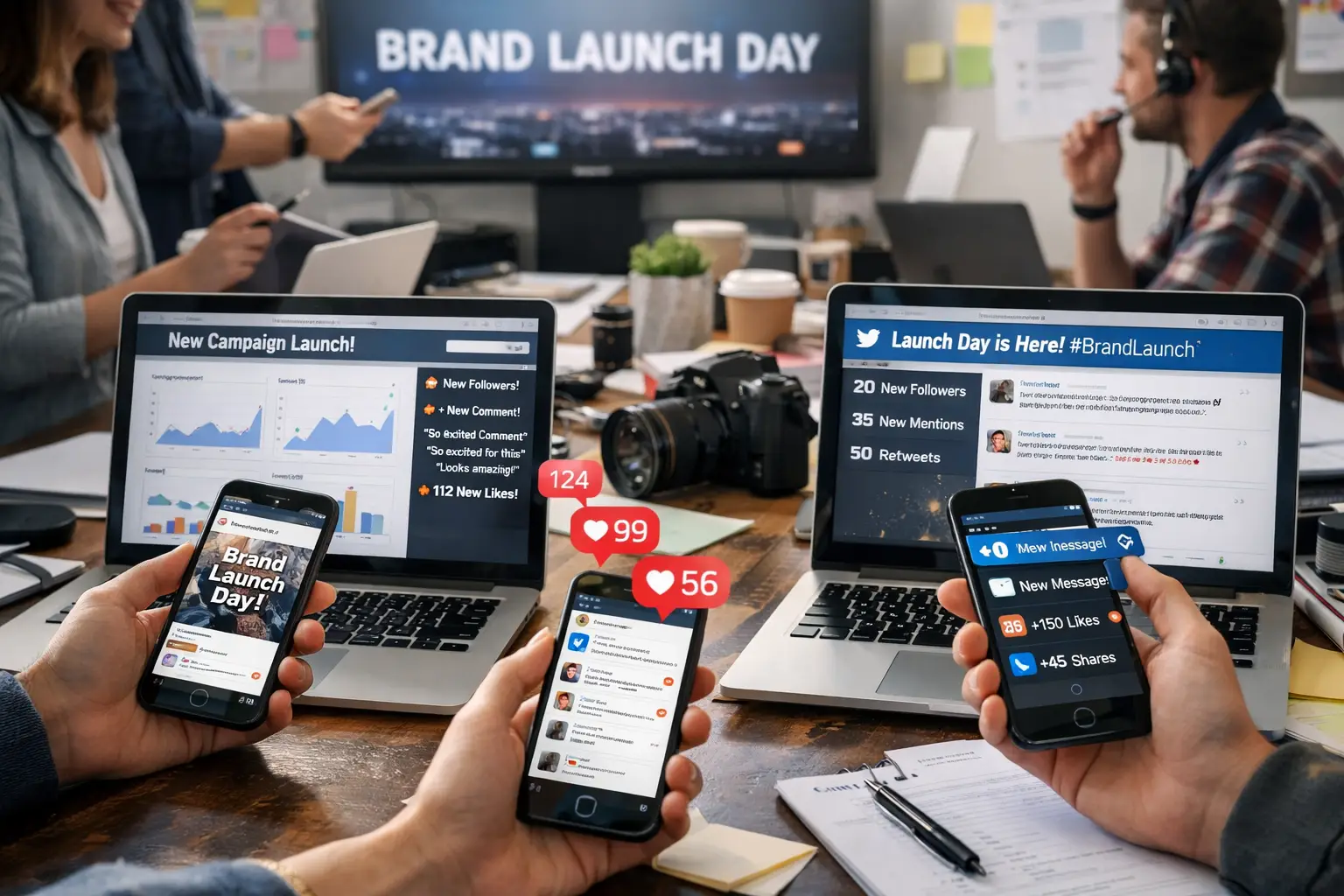
Launch day is the moment when all the strategy becomes visible. Successful PR agencies treat launch day as a coordinated event rather than a single announcement.
Media coverage, influencer content, brand social posts and email communications are timed to support each other. This creates a wave of attention that builds throughout the day rather than peaking once.
PR teams monitor coverage and engagement in real time. They respond to media inquiries, amplify earned placements and adjust messaging if needed. This agility helps maintain momentum and address unexpected opportunities or challenges.
Audience interaction is also important. Brands that engage with comments, shares and questions during launch appear more present and trustworthy.
A well-executed launch day sets the tone for how the product is perceived long after the initial announcement.
Many brands make the mistake of treating launch as a short-term activity. Top PR agencies understand that a post-launch strategy is just as important as the initial rollout.
After launch, agencies focus on extending the story. This may include follow-up media outreach, founder interviews, trend tie-ins, or user-generated content amplification.
Thought leadership becomes a valuable tool during this phase. Founders and brand leaders are positioned as experts who can speak on broader industry topics related to the product.
PR teams also analyze performance data to identify what resonated most with audiences. These insights inform future campaigns and product updates.
Sustained PR activity helps transform early interest into long-term brand loyalty and sales growth.
Jive PR + Digital is a PR and influencer marketing agency that grows consumer brands through culturally relevant storytelling that builds obsessed communities of superfans. They fuse influencer strategy, earned media, and social-first storytelling to create moments that move culture and drive measurable growth. From fashion and retail to lifestyle and CPG brands, Jive builds long-term credibility over short-term noise.
For DSW, Jive PR + Digital developed an influencer-led launch strategy centered on everyday style and accessibility. Creators reflected real-world lifestyles rather than aspirational imagery alone. Content showed how DSW footwear fit into daily routines, workwear, travel and weekends. The campaign aligned with cultural conversations around comfort, value and self-expression, generating organic engagement and sustained momentum across platforms.
Boutique PR agencies specialize in niche categories such as beauty, wellness, food, or lifestyle. These agencies often deliver deeper cultural insight and closer media relationships within specific industries.
Case studies from boutique agencies show strong engagement within targeted communities. Their launches focus on trust, storytelling and long-term loyalty rather than volume alone. These agencies are particularly effective for emerging brands and challenger products.
Measuring PR success goes beyond counting media mentions. Leading agencies use a combination of qualitative and quantitative metrics.
Awareness metrics include reach, impressions and share of voice. These indicate how widely the product story traveled.
Sentiment analysis helps assess how audiences feel about the product. Positive sentiment is often a stronger indicator of long-term success than volume alone.
PR agencies also evaluate engagement, referral traffic and conversions where possible. While PR is not always directly transactional, it strongly influences buyer behavior over time.
By connecting PR outcomes to business objectives, agencies demonstrate the true value of strategic product launches.
One common mistake is overhyping a product without delivering substance. This can lead to skepticism and disappointment.
Another issue is ignoring niche media and communities. Smaller outlets often drive deeper engagement and trust within specific audiences.
Some brands also fail to integrate PR with other marketing efforts. Disconnected messaging weakens impact and confuses consumers.
Treating PR as a one-week activity is another misstep. Without sustained effort, momentum fades quickly.
Avoiding these mistakes requires experience, planning and the right agency partnership.

Selecting the right PR agency is a critical decision for consumer brands. Not all agencies are equipped to handle product launches effectively.
Brands should consider agency size in relation to campaign scope. Global launches may require large networks, while niche products often benefit from specialized agencies.
Alignment with brand values is equally important. An agency should understand your audience, tone and long-term vision.
Experience within your category can also make a difference. Agencies familiar with your industry can anticipate challenges and identify opportunities more quickly.
Asking the right questions before signing ensures a productive and strategic partnership.
Product launches are no longer about announcements. They are about connection, credibility and cultural relevance.
Top PR agencies help consumer brands navigate crowded markets by telling meaningful stories, building trust and sustaining momentum beyond launch day.
Brands that invest in strategic PR position themselves for long-term success rather than short-term attention.
As consumer expectations continue to evolve, PR will remain one of the most powerful tools for turning great products into enduring brands.
For companies preparing to launch their next product, the right PR agency can be the difference between being noticed and being remembered.

Top PR agencies shape clear launch narratives, secure targeted media coverage and align influencer and social strategies. This helps brands build credibility quickly and drive early demand.
Brands should engage a PR agency at least three to four months before launch. This allows time for messaging, media outreach and pre-launch momentum building.
Influencer marketing adds trust and relatability to launch campaigns. Creators help products reach niche audiences through authentic demonstrations and storytelling.
Success is measured through media coverage quality, audience reach, engagement, website traffic and early sales lift tied to launch activity.
Agencies extend launch impact through follow-up media stories, creator partnerships, customer reviews and ongoing brand storytelling across platforms.


Megan Balyk
Vice President · 15+ Years of Experience
Megan Balyk is the Vice President at Jive PR + Digital, leading campaigns that build cult brands through bold storytelling and cultural relevance.
With 15+ years of industry experience, she specializes in helping ambitious brands connect authentically with Gen Z and Millennial audiences.
Connect on LinkedIn