Consumer brands are done guessing. When it comes to influencer marketing in 2026, the data is clear: micro influencers consistently outperform macro creators on engagement, purchase intent, and cost per conversion. If you are searching for the best micro influencer agency to help your brand break through the noise, you are not alone. Brands across food and beverage, wellness, lifestyle, and beauty are all moving their budgets toward creator tiers that actually convert.
Micro influencers are creators with 10,000 to 100,000 followers. What they lack in raw reach, they make up for in trust. Their audiences are tightly engaged, niche-specific, and primed to act on recommendations. According to the Influencer Marketing Benchmark Report 2026, micro influencers achieve an average 3.86% engagement rate on Instagram compared to just 1.21% for mega influencers. That gap translates directly to conversion outcomes.
This guide covers 10 verified, active agencies, what makes each one different, who they are best suited for, and how to make the right call for your brand.
Not all influencer agencies are built the same. The 10 agencies below were evaluated against a consistent set of criteria that reflect how consumer brands actually measure success in 2026.
Custom creator curation is the starting point. The best agencies hand-pick creators matched to your brand’s identity, audience profile, and campaign goals. Generic opt-in databases, where any creator can sign up, produce mismatched content and weak conversion rates. You want an agency with a real selection process.
Performance and ROI tracking goes beyond reach and impressions. Serious agencies attribute revenue and conversions back to specific creators and content pieces. If an agency cannot show you conversion data, that is a gap worth noting before you sign a contract.
Consumer brand vertical experience matters. An agency with proven results in food and beverage, health and wellness, lifestyle, or DTC will understand your buyer journey, your content sensitivities, and your retail distribution model. Generic case studies from B2B or tech campaigns do not transfer.
Full-funnel capability means the agency can support awareness through to conversion, not just top-of-funnel reach plays. Look for UGC integration, whitelisting, and paid amplification of winning creator content. That content should keep working after the original post goes live.
Transparent, consistent reporting means real dashboards and real attribution, not PDF summaries with reach and engagement totals. And finally, look for always-on programs. One-off campaigns deliver limited compounding value. The agencies that build ongoing creator relationships deliver results that improve over time.
Jive PR + Digital is one of the few agencies in this space that treats influencer marketing as a revenue channel from day one, not a brand awareness play. Based in Manhattan Beach, CA, with offices in Vancouver and Toronto, Jive has been building influencer programs since 2009. That is 17 years of hands-on experience, across campaigns for consumer brands in food and beverage, health and wellness, lifestyle, beauty, and immersive experiences.
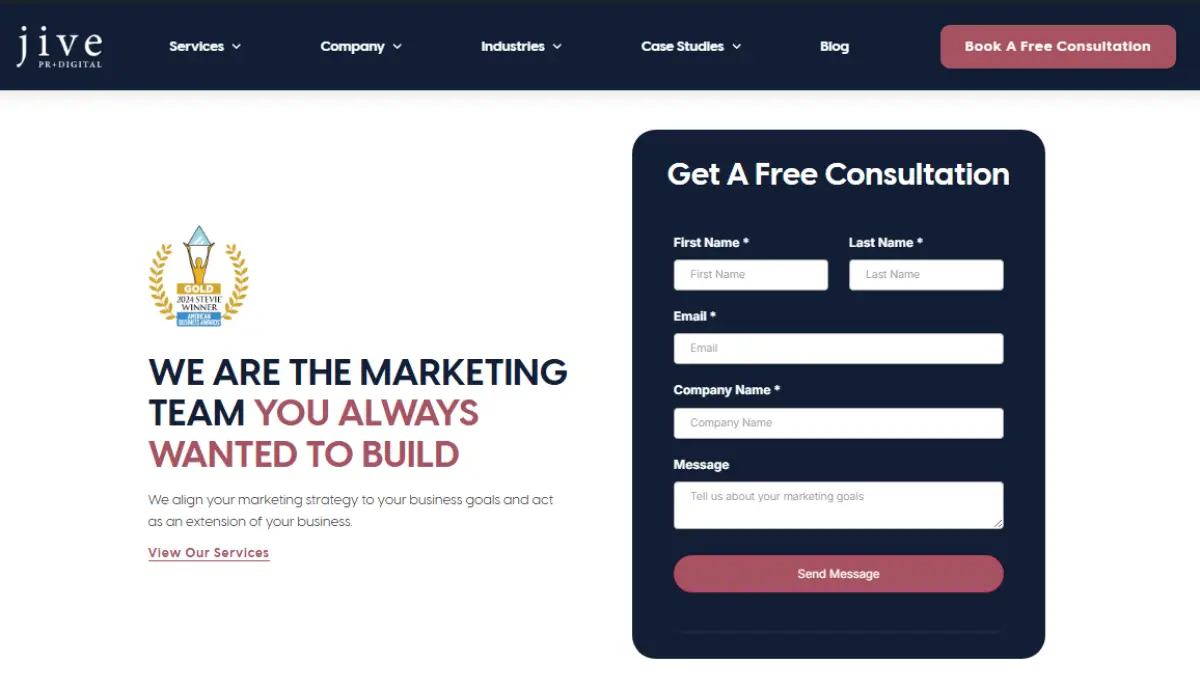
The model is performance-first and creator-specific. Jive hand-curates every creator roster based on brand DNA and audience intent. There are no opt-in platforms, no generic networks. Each influencer selection is deliberate, and content is not amplified until it proves itself organically. Whitelisting activates on winning content only, which means paid spend goes to assets that already have a track record.
The results back this up. Jive campaigns have delivered 150%+ ROI as a baseline and a 33% lift in conversion rate compared to branded content. Their influencer content feeds organic social, email campaigns, and paid ads simultaneously, creating a multi-channel content engine from a single creator activation.
Clients include DSW Shoes, Daiya Foods (for which Jive won Influencer Agency of the Year in 2024), Meow Wolf, Headspace, ByteDance, and Onside. Jive earned the 2024 Gold Stevie Award and holds a 4.9-star rating across 67 reviews.
Best for: Consumer brands in food and beverage, health and wellness, lifestyle, and beauty that need measurable, scalable influencer programs tied to real revenue outcomes. Explore Jive’s influencer marketing services.
The Influencer Marketing Factory is a global, full-service agency that manages campaigns end-to-end, from KPI-setting and target audience definition through influencer identification, contracting, content creation, and in-depth reporting. They work across TikTok, Instagram, and YouTube, with a particular strength in structured, process-driven campaign management.
Their reporting includes pixel-based tracking and custom promo code attribution, which gives brands a cleaner picture of revenue contribution.
Best for: Consumer brands looking for a globally scaled agency with a methodical approach to micro and nano-influencer campaign management and clear performance reporting.
Founded in 2011, Sway Group operates as a full-service influencer marketing agency with a network of 50,000 vetted creators. They serve verticals including CPG, food and drink, parenting, health and wellness, retail, travel, home and lifestyle, finance, and QSR. As a member of the Worldwide Partners global network, spanning 90 agencies across 50 countries, Sway brings both geographic reach and sector depth.
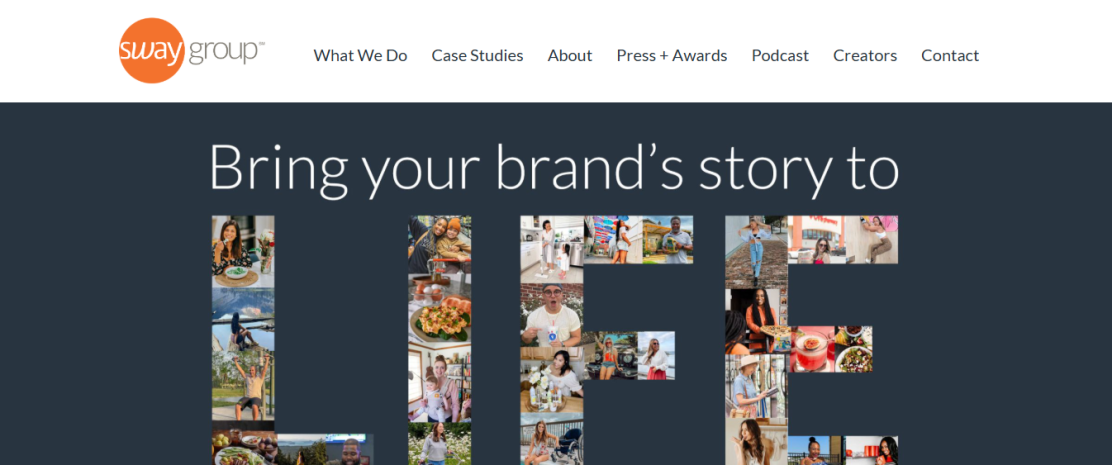
They are known for a diverse, curated creator network and a results guarantee.
Best for: Consumer brands in food, parenting, wellness, and retail that need a verified creator network and want guaranteed performance outcomes.
Now operating as part of the VML network, Obviously has completed 152,562 influencer collaborations, generated 5.1 billion organic impressions, and produced over 425,000 unique pieces of content. Their services cover custom creator networks, quick-turn content, always-on ambassador programs, product seeding, and UGC for commerce.
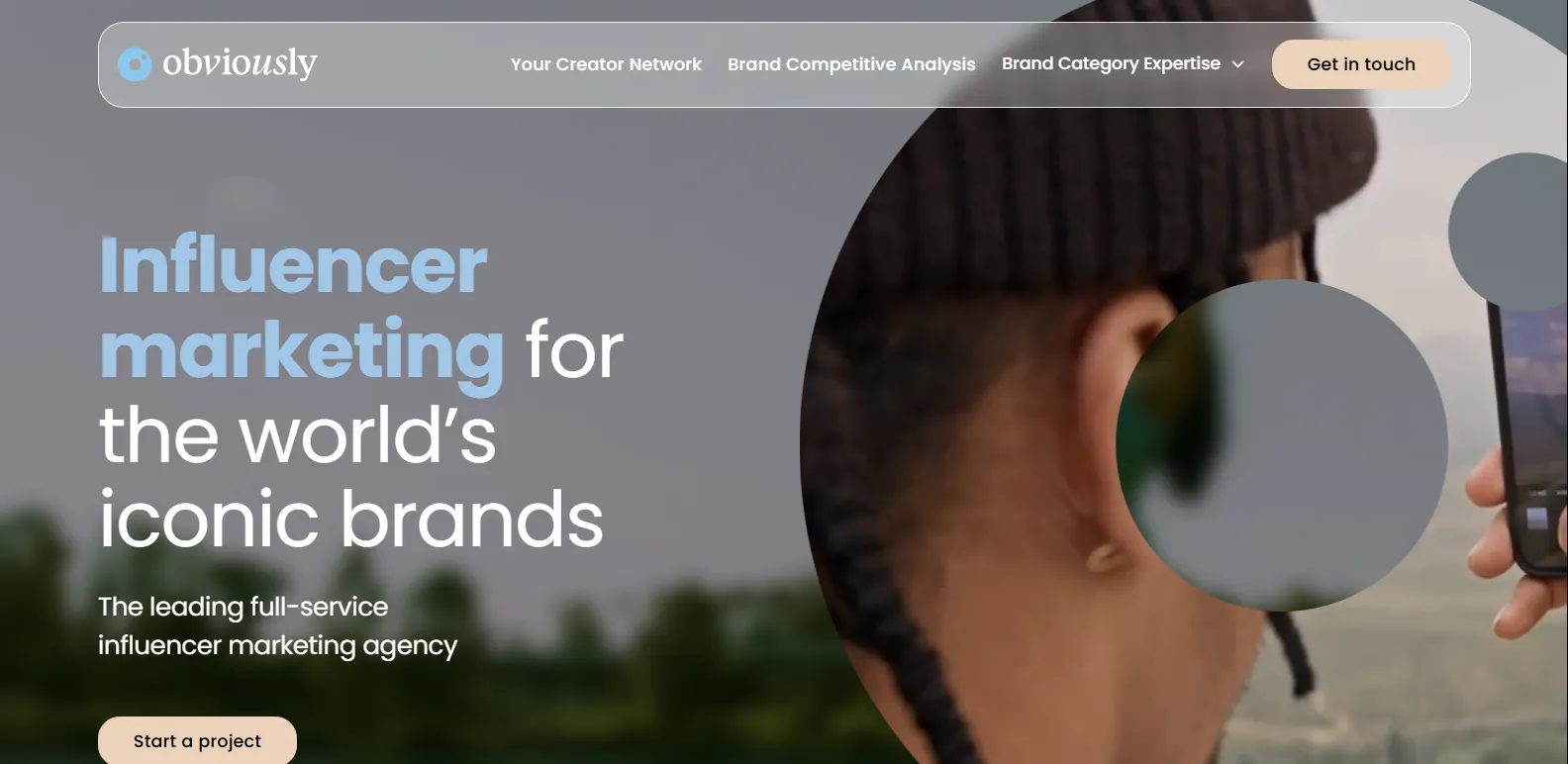
Their proprietary AI dashboard includes a “Share of Influence” tool that shows competitor influencer spending and highlights top-performing content trends in your category.
Best for: Enterprise and Fortune 500 consumer brands running large-scale influencer programs that need proprietary analytics and the operational capacity to manage high-volume creator campaigns.
The Shelf is a data-first influencer marketing agency and multiple Inc. 5000 honoree. Their research has been featured in Statista, Business Insider, HubSpot, and Social Media Today. What sets them apart is a proprietary technology stack that includes SpliceLab for content repurposing, Interest Graph Marketing, an Optimization Flywheel, and an 8,000 square foot Creator Space studio.
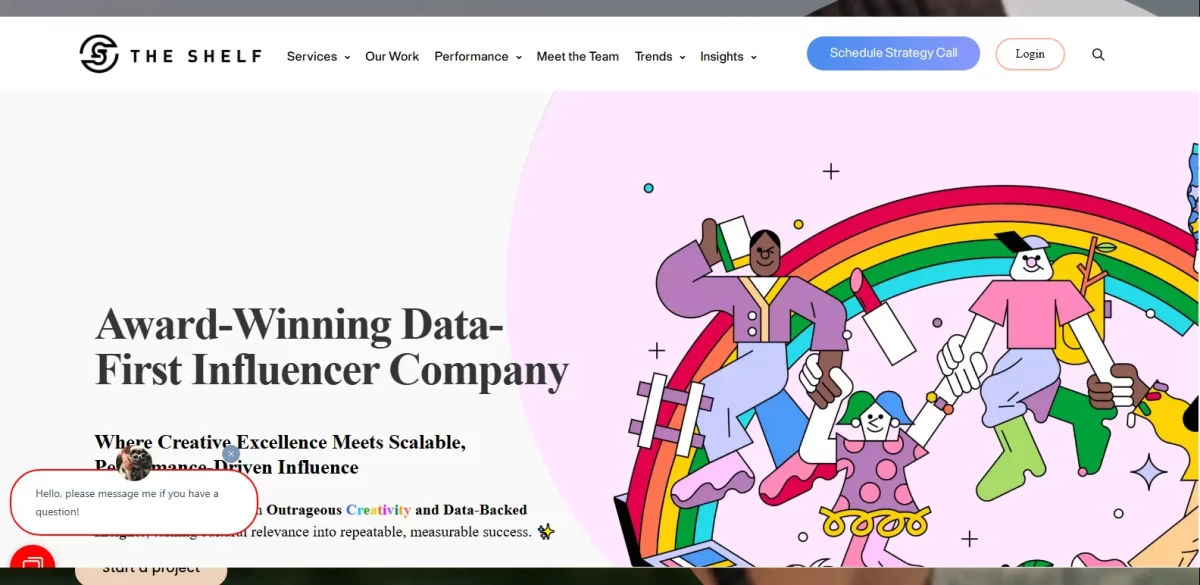
They run Brand Lift Studies, manage allowlisting strategies, and optimize campaigns in real time. Notable clients include Nordstrom, Hulu, Sam’s Club, Uniqlo, Viacom, and Russell Athletic. Their team spans 10 countries and speaks 16 languages.
Best for: Consumer brands that want data-driven creative campaigns with strong measurement, real-time optimization, and content repurposing built into the program.
NeoReach has managed more than $250 million in influencer marketing campaigns. Their platform combines fully-managed campaign services with self-service software built on 400 custom data points, API integration, and AI-powered fraud detection. Services include UGC creation, paid media, creator payments, product seeding, contests and sweepstakes, and event marketing.
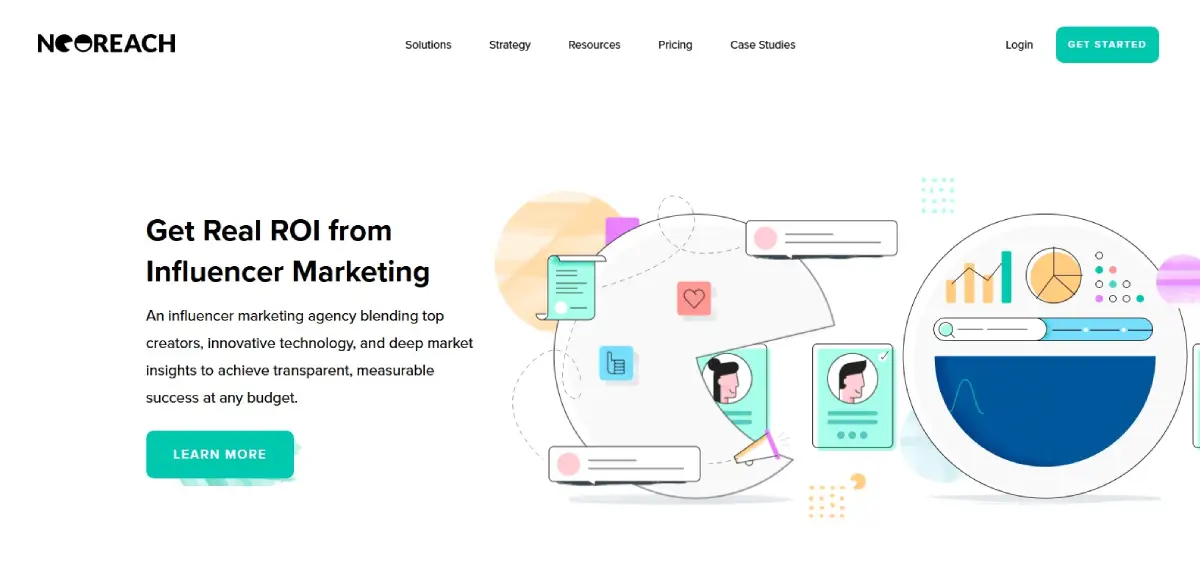
They operate across Instagram, TikTok, Facebook, YouTube, Twitter/X, Snapchat, and LinkedIn. Clients include NVIDIA, Sam’s Club, A&E, Just Play, and Laifen.
Best for: Consumer brands that want technology-backed influencer management with strong attribution, fraud detection, and cross-platform reach.
Founded in 2012, Viral Nation operates as both a brand marketing agency and a talent representation agency, with creators spanning 35 content verticals. On the brand side, they offer influencer marketing, a social content studio, experiential marketing, community management, paid performance marketing, and business intelligence.
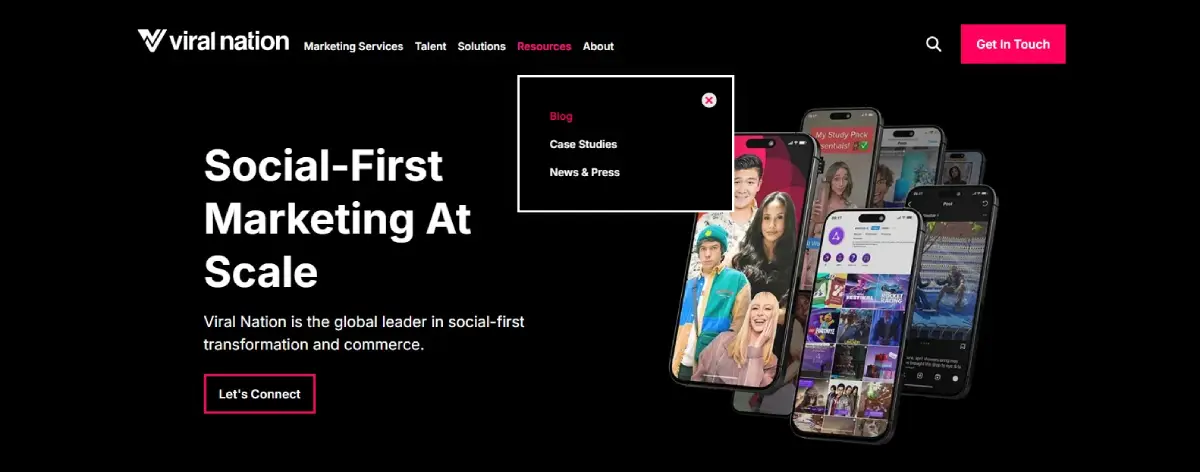
Their technology includes CreatorOS for AI-powered creator sourcing and vetting, and Secure, a brand safety AI. Clients include MGM Resorts, SmartWater, Walmart, 7-Eleven, Chegg, and Dairy Management Inc.
Best for: Consumer brands running large, multi-market campaigns that need a full-service social marketing and creator partner under one roof.
Mavrck rebranded to Later Influence in January 2024 and operates as a full-service influencer campaign management team, covering strategy, creator selection, activation, reporting, and ROI analysis. A key differentiator is that they work with creators they know directly, which enables faster and more reliable brand-creator matching than database-first approaches.
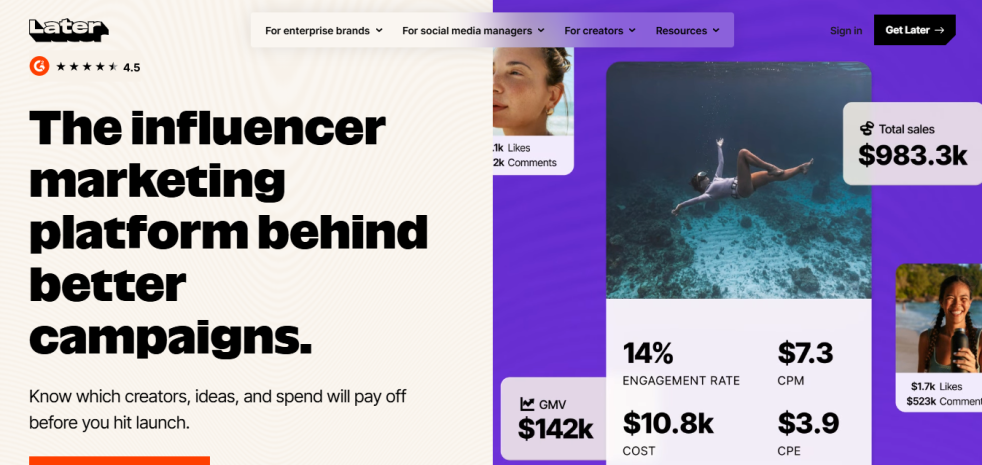
Internal data shows their managed campaigns deliver more content per campaign, more creators per campaign, and lower spend per creator compared to self-serve benchmarks. Campaign results for El Pollo Loco included 46.7 million impressions and a 2.2% average engagement rate.
Best for: Consumer brands that want managed influencer services with full campaign transparency, clean reporting, and a tech-enabled team.
Fanbytes merged into Brainlabs, one of the largest independent digital media agencies operating across North America, Europe, APAC, and LATAM. Their Creative and Influencer division focuses on performance creative and influencer marketing built to drive conversions, not just impressions.
Their core methodology is called “Test and Earn”: all media and influencer decisions are tested against revenue outcomes before scaling. Their AI platform, Cortex AI, is powered by Hippocampus, a proprietary repository of 2,500 logged experiments. They serve retail, DTC, healthcare, consumer tech, financial services, and travel brands.
Best for: Consumer brands that want influencer marketing embedded within a broader performance media strategy, with rigorous measurement and incrementality testing.
Sociallyin is a social media management company with a dedicated influencer marketing division, which makes them particularly relevant for brands that want both services under one contract. Their influencer offering covers creator discovery, influencer partnerships, content strategy, campaign management, and performance reporting.
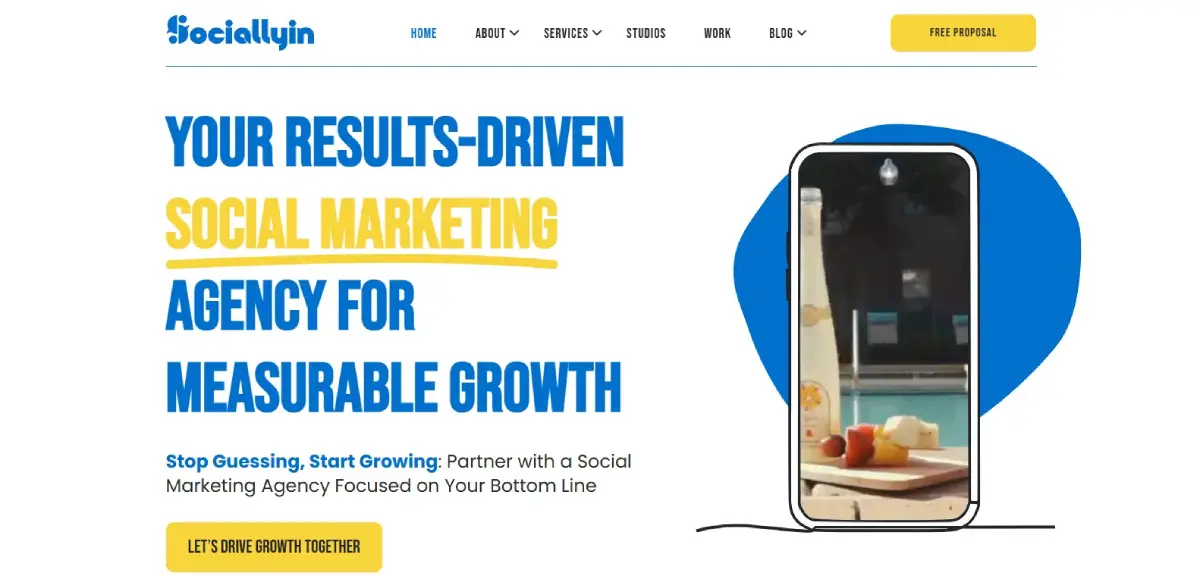
The integrated model means your influencer content and your owned social channels are managed with the same strategy, reducing the friction between creator campaigns and always-on brand content.
Best for: Consumer brands looking to consolidate social media management and influencer marketing into a single agency relationship.
| Brand Name | Rating | Reviews | Key Strength | Best For |
|---|---|---|---|---|
| Jive PR + Digital | ★★★★★ 4.9 | 67 reviews | Performance-first influencer programs with 17 years of consumer brand experience | Food & beverage, health & wellness, lifestyle, and beauty brands |
| The Influencer Marketing Factory | ★★★★ 4.2 | 5 reviews (Clutch) | Structured, process-driven campaigns with pixel-based tracking | Brands needing globally scaled micro & nano influencer management |
| Sway Group | N/A | Not yet reviewed (Clutch) | 50,000-creator vetted network with guaranteed performance outcomes | Food, parenting, wellness & retail brands |
| Obviously | N/A | Not yet reviewed (Clutch) | 152K+ influencer collaborations with proprietary AI analytics dashboard | Enterprise & Fortune 500 brands running large-scale campaigns |
| The Shelf | N/A | Not publicly listed | Proprietary tech stack with real-time optimization & Brand Lift Studies | Data-driven brands wanting measurement & content repurposing |
| NeoReach | N/A | Not yet reviewed (Clutch) | $250M+ in managed campaigns with AI-powered fraud detection | Brands needing tech-backed management with strong attribution |
| Viral Nation | ★★★★★ 5.0 | 2 reviews (Clutch) | Dual brand & talent agency spanning 35 content verticals | Large multi-market campaigns needing full-service social coverage |
| Later Influence (formerly Mavrck) | N/A | Not yet reviewed (Clutch) | Tech-enabled managed campaigns with direct creator relationships | Brands wanting managed influencer services with full transparency |
| Brainlabs (formerly Fanbytes) | ★★★★★ 5.0 | 1 review (Clutch) | Test-and-earn methodology with Cortex AI performance tracking | Brands embedding influencer marketing within broader performance media |
| Sociallyin | ★★★★★ 4.8 | 60 reviews (Clutch) | Integrated social media management & influencer marketing under one roof | Brands consolidating social media and influencer into a single agency |
The agency that is right for your brand depends on what you are actually trying to accomplish. Start there.
Define your campaign goal before you open any agency conversations. Awareness campaigns, product trial programs, UGC creation, and direct conversion campaigns each require a fundamentally different agency model. An agency optimized for reach plays will not necessarily be the right fit for a brand running conversion-first programs, and vice versa.
Ask about their creator vetting process in writing. There is a meaningful difference between agencies that hand-select creators based on audience quality, content fit, and past conversion data, and those that pull from opt-in databases where any creator can join. Request their exact process and look for specifics, not talking points.
Ask to see sample reports before you commit. The report should show conversion attribution, not just reach and engagement totals. If the agency cannot connect influencer content to downstream purchase behavior, their reporting model is built for the wrong goals.
Check vertical experience against your specific category. A food and beverage brand needs an agency with food and beverage case studies, not generic lifestyle results. The buyer journey, the content sensitivities, and the conversion triggers are different across categories.
Clarify content rights upfront. Can influencer content be repurposed for paid ads, email campaigns, or retail? Ask specifically about whitelisting rights and the timeline for those rights. The agencies that build this into their standard offer are set up to deliver compounding value from each creator activation.
Ask about paid media integration. The strongest programs amplify winning creator content through paid channels rather than letting it expire after the original post. An agency that can connect creator content to paid amplification is offering a significantly higher ROI ceiling than one that runs influencer campaigns in isolation.
Finally, ask whether they can build an always-on program. One-off campaigns have limited compounding value. The agencies that build ongoing creator relationships and test new content continuously are the ones delivering results that improve quarter over quarter.
The engagement advantage is no longer a hypothesis. Micro influencers achieve 3.86% average engagement rates on Instagram compared to 1.21% for mega influencers, according to the Influencer Marketing Benchmark Report 2026. On TikTok, nano and micro creators consistently outperform larger accounts on organic reach. The algorithm rewards content that generates real interaction, and micro creators are built for exactly that.
Authenticity drives conversion in a way that branded content cannot replicate. Consumers have become skilled at identifying polished, staged brand posts. Micro influencers, who build their audiences through consistent, niche-specific content, carry a level of trust with their followers that most branded content cannot buy. That trust shortens the path from discovery to purchase.
Cost efficiency gives consumer brands a testing advantage. The cost-per-engagement for micro influencers is roughly $0.20 compared to $0.33 for macro creators. That gap means a brand can activate multiple micro creators for the cost of one macro deal, run real A/B tests across content formats and audiences, and scale what works.
Algorithm dynamics in 2026 continue to favor authentic creator content on both TikTok and Instagram. Polished brand posts are deprioritized in favor of content that looks and feels native to the platform. Micro influencer content, produced in the creator’s own voice and format, is built to perform in that environment.
UGC value extends well beyond the original post. Micro influencer content can be repurposed for paid ads, email campaigns, and e-commerce product pages. According to Thunderbit’s 2026 influencer marketing statistics, brands achieve an average return of $5.78 for every dollar spent on influencer marketing, with top-performing campaigns reaching $11 to $18 ROI per dollar through optimized targeting.
Performance accountability is now the norm. Agencies can no longer hide behind reach and impression totals. Brands expect conversion attribution, and the agencies built around performance tracking rather than vanity metrics are the ones growing their client rosters in 2026.
Every agency on this list is active and credible. The right choice depends on your category, your campaign goals, and how your brand measures success. If you are a consumer brand in food and beverage, wellness, lifestyle, or beauty, and you need influencer programs tied to real revenue outcomes rather than reach reports, Jive PR + Digital is the only agency on this list built from the ground up as a performance-first influencer partner, with 17 years of results and the case studies to prove it.
Ready to build a micro influencer program that actually drives revenue? Book a free consultation with Jive PR + Digital today.
A micro influencer agency specializes in identifying, vetting, and managing partnerships with creators who have between 10,000 and 100,000 followers. These agencies handle everything from creator sourcing and contracting to campaign execution, content approval, and performance reporting on behalf of brands.
Costs vary significantly based on scope, agency size, and campaign complexity. Managed influencer programs typically range from $5,000 to $50,000 per month, depending on the number of creators, platforms, and whether paid amplification is included. Most reputable agencies offer project-based and retainer pricing models.
Micro influencers have 10,000 to 100,000 followers. Nano influencers have fewer than 10,000. Nano influencers tend to have higher engagement rates within very tight communities but reach smaller audiences. Micro influencers balance niche authority with enough reach to move the needle for consumer brands at scale.
For most consumer brands, yes. Micro influencers deliver higher engagement rates, better cost-per-engagement ($0.20 vs $0.33 for macro creators), and stronger purchase intent from audiences who trust their recommendations. They also produce content that can be repurposed as UGC for paid ads and email.
Effective measurement goes beyond likes and reach. Ask your agency to track pixel-based conversions, promo code attribution, traffic from creator-specific UTM links, and downstream purchase data. The best agencies connect influencer content performance to actual revenue, not just engagement volume.
Instagram and TikTok are the primary platforms for micro influencer campaigns in 2026. TikTok favors authentic, native-format content and rewards micro creators with strong organic reach. Instagram performs well for lifestyle, beauty, and food content, particularly in Reels and Stories formats. YouTube works for longer-form, tutorial-style content.
It depends on your goals and budget. For a product launch or awareness campaign, activating 10 to 30 micro influencers gives you enough content volume to test different messaging angles and identify top performers. For always-on programs, a rotating roster of 20 to 50 creators allows for continuous content production and audience diversification.

Megan Balyk
Vice President · 15+ Years of Experience
Megan Balyk is the Vice President at Jive PR + Digital, leading campaigns that build cult brands through bold storytelling and cultural relevance.
With 15+ years of industry experience, she specializes in helping ambitious brands connect authentically with Gen Z and Millennial audiences.
Connect on LinkedIn