The food and beverage industry is more competitive than ever. Consumers have endless choices and brand trust now influences purchase decisions as much as taste or price. In such a crowded marketplace, strategic PR is no longer optional; it is essential for standing out, building credibility and driving long-term growth.
From media relations and influencer campaigns to product launches and experiential activations, top food & beverage PR agencies help brands connect with the right audiences in meaningful ways. This guide breaks down the strategies these agencies use, highlights real-world case studies and offers guidance on choosing the best PR partner for your brand.

Food and beverage PR differs from general brand PR because it often requires managing multiple layers of complexity:
Traditional advertising alone struggles to build this level of trust. Earned media, influencer campaigns and storytelling have become critical in convincing consumers to try and adopt new food and beverage products.
Top-performing food & beverage PR campaigns are built around a combination of strategic pillars:
1. Media Relations
Securing coverage in national, trade and niche food publications is foundational. Media mentions lend credibility and amplify reach. Press releases, product seeding and tailored pitches to food editors, lifestyle writers and nutrition bloggers are essential.
2. Influencer & Creator Marketing
Collaborations with chefs, food bloggers, TikTok personalities and Instagram creators bring authenticity to campaigns. Influencers make products relatable by integrating them into real-life experiences like home cooking, dining out, or wellness routines.
3. Product Launch Campaigns
Timing, messaging and coordinated channel promotion define a successful launch. Agencies manage embargoes, creative narratives and cross-platform activation to maximize visibility.
4. Experiential Marketing & Events
Tastings, pop-ups and brand activations allow consumers to experience products firsthand. These events often generate both social and earned media coverage while reinforcing brand positioning.
5. Thought Leadership & Brand Storytelling
Founder interviews, chef profiles and sustainability narratives position brands as category experts. Storytelling enhances consumer trust and supports long-term brand equity.
6. Crisis Communication & Reputation Management
Handling recalls, negative reviews, or ingredient concerns requires proactive communication. Agencies ensure messaging is transparent and timely to maintain consumer confidence.
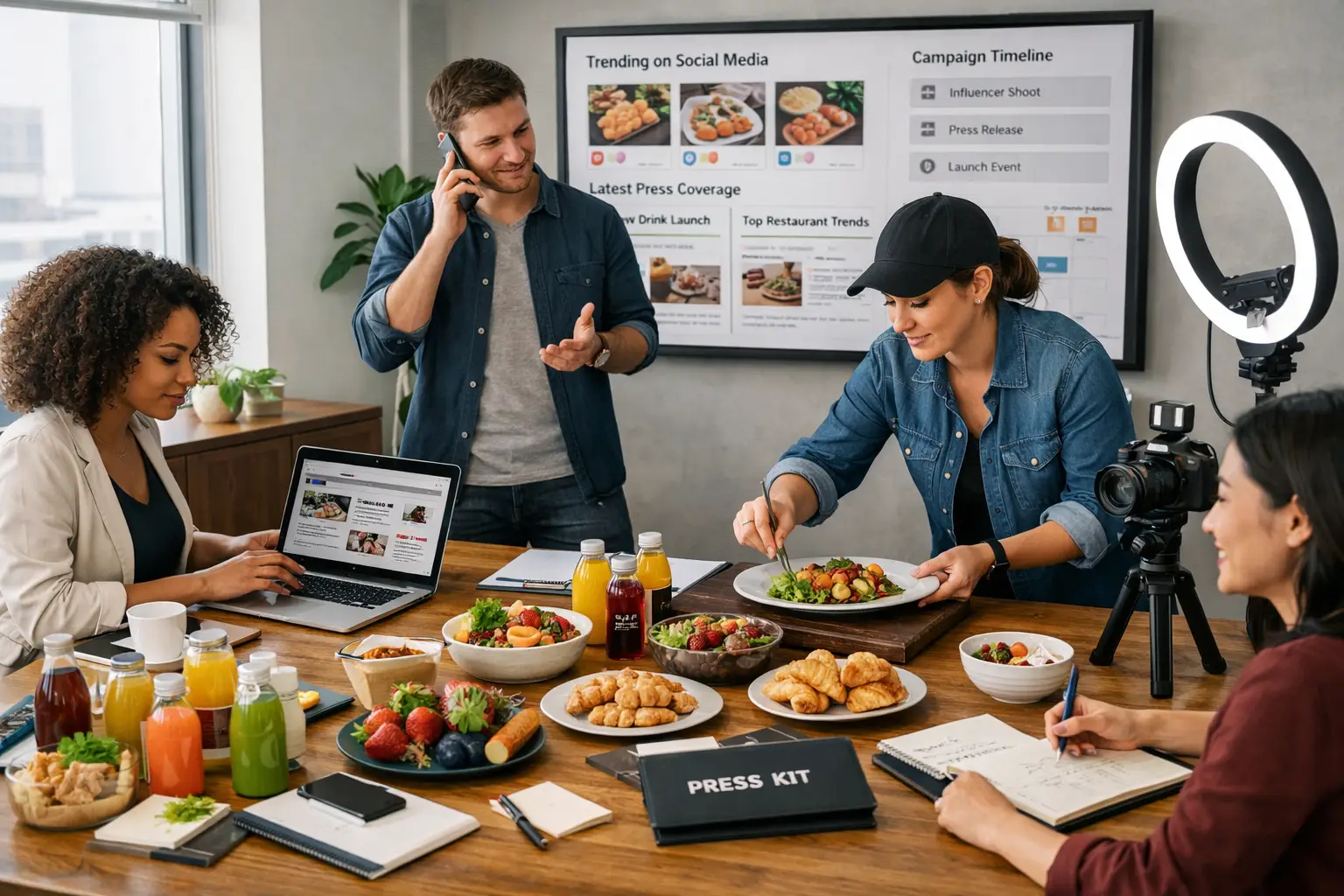
Leading food & beverage PR agencies combine creativity, data and cultural relevance. They do more than execute campaigns; they anticipate trends, understand consumer behavior and measure success rigorously.
Here’s how top food & beverage PR agencies execute strategies that drive measurable results:
CPG brands (F&B, skincare, apparel) choose Jive PR + Digital because they specialize in culturally relevant storytelling and influencer-first campaigns that drive both brand equity and sales goals. On average, Jive PR + Digital brands see a 200% ROI through culturally relevant influencer campaigns that build cult brands and move product.
Jive PR + Digital partnered with Mac’s, a leading CPG snack brand, to launch a multi-platform influencer campaign rooted in authenticity. Rather than traditional ads, creators shared real-life moments featuring Mac’s pork rinds in culturally relevant, everyday settings — from road trips to snack breaks and game nights. This creator-led approach sparked organic engagement, boosted website traffic, and strengthened brand recall, ultimately driving over $2M in sales across Walmart stores nationwide. Proof that when storytelling meets culture, results follow.
Global enterprise-level brands require strategic depth, research and multi-market coordination. Edelman combines PR, media relations, influencer marketing and analytics to support large-scale launches.
Edelman managed the launch of a global beverage brand, combining media relations, social listening and executive visibility. Campaigns were coordinated across regions, ensuring consistent messaging. Influencer and thought leadership content reinforced product credibility, generating widespread coverage in lifestyle and health publications.
Consumer-focused brands seeking creative, results-driven PR campaigns. 5WPR emphasizes multi-channel storytelling, experiential activations and influencer collaborations to amplify visibility and engagement.
5WPR helped a gourmet food company expand into new U.S. regions. The agency leveraged lifestyle media, influencers and targeted experiential events such as tasting sessions and chef-led cooking classes. The launch generated strong social buzz, national press coverage and measurable retail sales growth.
Integrated communications blending PR, influencer marketing and trend-driven campaigns. Zeno Group prioritizes authenticity, cultural relevance and measurable results for food & beverage brands.
Zeno Group worked with a plant-based beverage brand to highlight sustainability and health benefits. Influencers and food journalists were activated to tell authentic stories, while PR campaigns emphasized transparency in sourcing and production. The result was strong earned media coverage, positive social sentiment and heightened consumer awareness of the brand’s values.
Strategic storytelling for food & beverage brands, focusing on community engagement, CSR initiatives and localized campaigns. Padilla combines traditional PR with influencer and experiential strategies to deliver measurable impact.
Padilla supported a craft beverage company launching regionally. They combined media relations, influencer partnerships and community-driven events. Highlighting local sourcing and brand heritage, Padilla’s campaign generated high-quality coverage, social engagement and increased trial in key markets.

Selecting the right agency requires evaluating:
Top food & beverage PR agencies measure success through a combination of quantitative and qualitative metrics, ensuring campaigns demonstrate real business value.

Even experienced brands can stumble in food & beverage PR. Top agencies identify and help avoid common pitfalls:
Food & beverage PR is no longer a luxury; it is a strategic growth tool for brands seeking market leadership. Top agencies such as Jive PR + Digital, Edelman, 5WPR, Zeno Group and Padilla provide expertise in crafting authentic stories, executing campaigns across media and creators and measuring results to demonstrate real business impact.
The right PR partner transforms brand visibility into trust, cultural relevance and measurable consumer engagement. In competitive food & beverage markets, investing in expert PR ensures that campaigns do more than generate attention; they drive sustained growth, strengthen reputation and position brands for long-term success.

A strong food and beverage PR agency understands consumer trends, food media and industry regulations. They combine earned media, creators and storytelling to build trust and credibility.
Food and beverage PR differentiates brands through authentic storytelling, media coverage and creator partnerships that build trust in crowded, competitive markets.
Yes. PR influences purchasing by increasing brand trust, visibility and credibility, which supports trial, repeat purchases and retail expansion.
PR agencies manage messaging, media outreach and creator seeding to build momentum before, during and after a product launch.
PR success is measured through media quality, reach, engagement, sentiment, website traffic and long-term brand trust.