Last Updated: July 29, 2026
The guides ranking for this keyword were written by social media software companies. They give you 16, 19, or 29 best practices, most of which reduce to variations of “post consistently,” “use video,” and “engage with your audience.” That advice is not wrong. It is simply insufficient for a consumer brand trying to build a category position and drive purchase through social channels.
Consumer brand social media is not a publishing schedule problem. It is a strategic problem. The brands producing the highest returns on social in 2026 are not posting more frequently than their competitors. They are building social programs that integrate earned media thinking, creator relationships, and platform-native content into a single system.
This guide is written for brand founders and marketing managers who need to know what actually works for consumer brands, not what makes a compelling feature list for a social media dashboard.
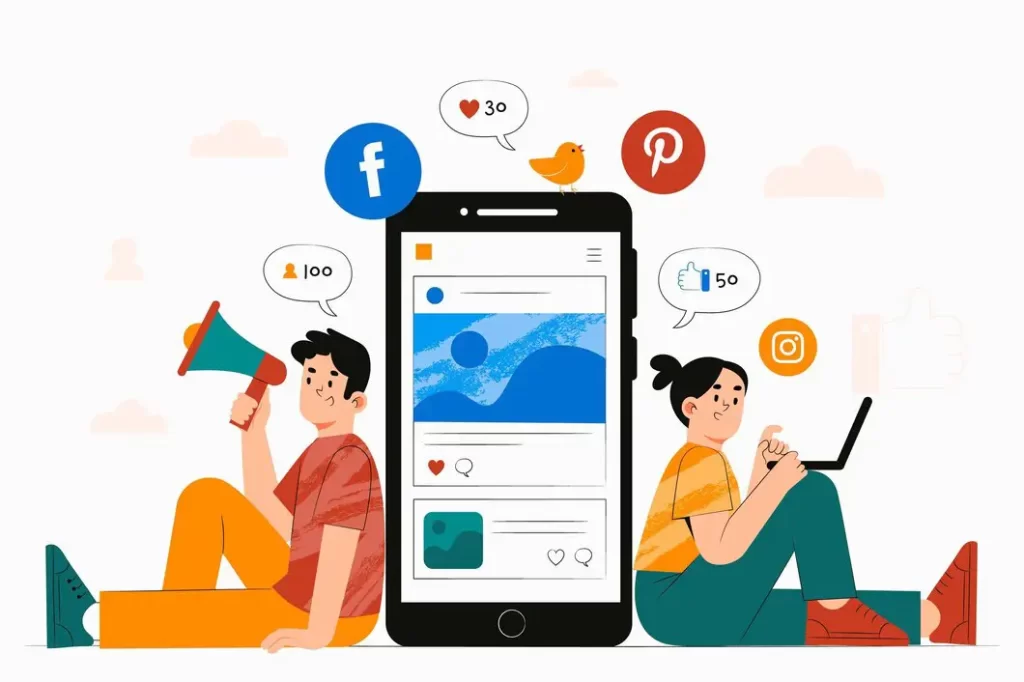
The first and most expensive social media mistake consumer brands make is selecting platforms based on follower counts or personal familiarity rather than buyer discovery behavior.
The question is not which platform has the largest user base. It is where your specific buyer goes when they are in product discovery mode. For most consumer brands in food and beverage, fashion, beauty, and wellness, that answer in 2026 is TikTok and Instagram. According to eMarketer 2026 data, TikTok Shop drives a 4.7% conversion rate for consumer product categories, compared to Instagram Shopping at 1.9%. The platform with more users is not always the platform where your buyer is ready to discover and purchase.
Pinterest is the most underused platform in consumer brand social strategy and also one of the most effective. According to Pinterest research, 87% of Pinners report purchasing a product they discovered on the platform. Pinterest content has a multi-month shelf life compared to the 48-hour peak for TikTok content. For home, food and beverage, fashion, beauty, and wellness brands, Pinterest is a high-intent discovery channel that most competitors have not fully invested in.
Start with two platforms you can run well. Build your content program and creator network there before expanding to additional channels.
Most content calendars are built around a frequency target. Post three times per week on Instagram. Post five times per week on TikTok. Those targets miss the most powerful driver of consumer brand social performance, which is cultural and earned media timing.
The consumer brands producing the strongest social results in 2026 build their content calendars around three content types running simultaneously. The first is PR moments: product launches, press coverage, brand events, seasonal cultural hooks, and newsworthy milestones that give social content a reason to exist beyond posting frequency. The second is creator content from an ongoing partner network. The third is brand-owned storytelling that builds identity between PR moments.
When a press mention lands in a trade publication or lifestyle outlet, that coverage becomes the anchor for a week of social content across TikTok and Instagram. When a creator captures a genuine reaction to your product, that content gets repurposed as paid media across the same platforms. This is the model that separates brands with compounding social momentum from brands with busy-but-flat social feeds.
According to the 2025 Sprout Social Index, 38% of consumers say the most memorable brands prioritize original content over trend-chasing. Original content rooted in real PR moments and creator relationships produces the brand distinctiveness that generic social publishing schedules do not.
Short-form video is the highest-returning content format in consumer brand social in 2026. This is not a prediction. It is the consistent finding across every major social media research study published in the past 24 months.
For consumer brands, short-form video on TikTok and Instagram Reels does three things that static content cannot. It demonstrates products in context. It shows real human reactions rather than brand-approved marketing language. And it benefits from platform algorithms that actively push short-form video to non-followers, giving your brand organic reach that static posts cannot generate.
The production quality threshold for short-form video has inverted. Polished, high-production content performs worse than authentic creator content in most consumer categories. UGC creator content accounts for 56% of all high-performing TikTok content, according to the EmbedSocial 2026 UGC Statistics report. This means the most effective short-form video for consumer brands is not produced in a studio. It is produced by a creator who genuinely uses your product and captures that use in a way their audience trusts.
YouTube Shorts and Pinterest video pins extend the short-form footprint for consumer brands that want to reach buyers at different stages of the purchase journey without requiring a completely separate content production process. Repurpose your highest-performing TikTok content across these platforms before investing in platform-specific production.
Social media response time is a brand trust signal, not a customer service preference. The 2025 Sprout Social Index reports that 73% of consumers will switch to a competitor if a brand does not respond to them on social media. Separately, 89% of consumers expect a brand to respond on social media within 24 hours, and for consumer brands in categories with high purchase frequency, the expectation is significantly faster.
Most consumer brand social teams are not set up to meet this expectation. They batch responses at the end of the day or treat social media as a publishing channel rather than a conversation channel. That creates a measurable trust gap between brands that respond quickly and brands that respond slowly or not at all.
Setting up a real-time response workflow does not require a large team. It requires assigning ownership of social monitoring to a specific person daily, setting up notification alerts for comments and DMs across active platforms, and having a library of approved response templates for common questions about ingredients, shipping, sizing, and availability. With those three elements in place, response time drops from hours to minutes.
Brands that respond quickly and with genuine personality in comments build the kind of relationship with their audience that drives both loyalty and social proof. A brand that replies thoughtfully to a negative comment in public turns a detractor into a demonstration of trust for everyone who reads the thread.
The most consistent finding across social media research in 2026 is that promotional content underperforms authentic content at every level of the funnel. According to the 2025 Sprout Social Index, authentic, non-promotional content is the number one thing consumers say they are not seeing enough of from brands on social media.
The 80/20 rule is a practical framework for consumer brand social calendars. 80% of your content should educate, entertain, inspire, or tell stories. 20% of your content should convert. This ratio keeps your social presence from feeling like an ongoing advertisement and maintains the audience engagement that makes your conversion content actually convert.
For consumer brands, the 80% non-promotional content bucket is not difficult to fill. Food and beverage brands have recipe content, sourcing stories, and cultural moments around food. Wellness brands have education content, founder stories, and real customer transformations. Fashion and lifestyle brands have styling content, behind-the-scenes production, and collaborator spotlights. The content exists. The discipline is resisting the pressure to turn every post into a product post.
The conversion content, your 20%, performs better when it appears in a feed that the audience trusts. A product post from a brand that only ever posts product content gets ignored. The same product post from a brand that consistently shows up with value-first content earns the consideration it is asking for.
Consumer brands that run one or two influencer campaigns per year and declare influencer marketing does not work have misunderstood the model. The brands producing the strongest social returns from creator relationships in 2026 maintain ongoing creator networks, not campaign-by-campaign rosters.
An ongoing creator network for a consumer brand typically includes three tiers. Micro-influencers with 10,000 to 100,000 followers produce high-engagement content with strong audience trust in specific niches aligned to your product category. According to the Influencer Marketing Benchmark Report 2026, micro-influencers generate an average engagement rate of 3.86%, compared to 1.21% for macro-influencers. Mid-tier creators with 100,000 to 500,000 followers extend reach while maintaining category relevance. Macro creators and brand ambassadors provide broad reach and credibility signals for product launches and seasonal campaigns.
The practical advantage of maintaining a creator network rather than running campaign-by-campaign is access to authentic creator reactions over time. The most valuable creator content is not the first sponsored post from a new partner. It is the third or fourth post from a creator who genuinely uses your product and whose audience has seen that ongoing relationship. That repetition is what converts audiences into buyers.
Jive PR + Digital manages ongoing creator relationships for consumer brands across food and beverage, wellness, lifestyle, and entertainment. The programs that produce the highest returns are built around long-term creator partnerships, not one-time activations.
The most underleveraged social media strategy for consumer brands is also the most obvious: use your PR wins as social content.
When a product lands coverage in a major publication, that press mention should be redistributed across every active social platform the same day. When a launch event generates video content and creator posts, those assets should be scheduled for social amplification over the following two weeks. When a brand spokesperson secures a podcast appearance, the key quotes and clips become platform-native social content before the episode even publishes.
PR-driven social content performs well for a specific reason: it carries third-party credibility that brand-created content cannot replicate. A screenshot of a press mention shared on Instagram is more persuasive to a prospective buyer than a designed promotional graphic with the same information. A creator post from a brand event carries organic authenticity that a scripted brand video cannot match.
The public relations program at Jive PR + Digital feeds directly into the social media calendar for every consumer brand client. Earned media placement becomes social proof. Event activation becomes creator content. Product launch coverage becomes the anchor for two weeks of social storytelling. This integration is what produces compounding results rather than isolated campaign spikes.
Reach and follower count are the metrics that make social media look productive while hiding whether it is actually working. The metrics that tell you whether social media is driving business outcomes for a consumer brand are different.
For organic social content, track saves, shares, and link clicks alongside likes and comments. Saves indicate that a viewer found your content valuable enough to return to later. Shares indicate that a viewer found your content worth distributing to their own audience. These are the signals of genuine content performance, not vanity metrics.
For influencer and creator content, track conversion rate, customer acquisition cost, and the ratio of followers gained to engagement generated by each creator. A creator who drives a high engagement rate but zero tracked conversions over three campaigns is building awareness for your brand without moving buyers through the funnel. Adjust the content brief or the creator relationship accordingly.
For paid social amplification of organic and creator content, track return on ad spend, cost per click, and cost per acquisition alongside reach and impressions. According to research published by Archive, UGC repurposed as paid media achieves 4x higher click-through rates and 50% lower cost-per-click compared to traditional brand creative. This is the case for building a content library from creator partnerships rather than relying on studio-produced paid social creative.
Social listening is not a crisis management tool. It is a brand intelligence tool that the strongest consumer brand social teams use proactively to shape content strategy, identify creator opportunities, and catch reputation issues before they escalate.
Setting up keyword monitoring across TikTok, Instagram, X, Reddit, and YouTube for your brand name, product names, and competitors gives you a real-time signal of what your audience is saying, what questions they are asking, and what content is resonating in your category. This intelligence should feed directly into your content calendar, your creator briefs, and your PR pitching strategy.
Social listening also surfaces creator opportunities that formal influencer outreach misses. When an account with 25,000 followers in your product category posts organically about your product, that creator is already an advocate. Activating them with a proper partnership converts organic affinity into structured content output at a fraction of the cost of cold influencer outreach.
Social media content is inconsistent when it is written by multiple team members without a shared standard. For consumer brands, inconsistent voice signals a lack of brand maturity that buyers pick up on even if they cannot articulate it.
A practical brand voice guide for social media does not need to be a 50-page document. It needs to answer five questions: What tone does the brand use? Who is the brand talking to? What language does the brand avoid? What signature phrases or concepts anchor the brand identity? And what does off-brand content look like so the team can recognize it before publishing?
The same voice guide that shapes your Instagram captions should shape your creator briefs. When creators know the brand voice and have a clear brief, their content integrates with your owned social content rather than sitting apart from it. That cohesion across creator and owned content produces the consistent brand signal that builds recognition and trust over time.
What are the most important social media best practices for consumer brands in 2026?
The most important practices are platform selection based on buyer discovery behavior, short-form video as the primary content format, a response time of under one hour for comments and DMs, the 80/20 rule for promotional versus authentic content, and building an ongoing creator network rather than running isolated campaigns. These five practices, executed consistently, outperform any combination of tactical tweaks.
How often should a consumer brand post on social media?
Posting frequency matters less than posting quality and timing. The 2025 Sprout Social Content Benchmarks Report found that 74% of consumers prefer brands that post one to two times per day. For most consumer brands, the right approach is consistent publishing tied to PR moments, creator content, and brand storytelling, rather than a fixed daily posting target that forces low-quality content into the feed.
What is the 80/20 rule in social media marketing?
The 80/20 rule means that 80% of your social content should educate, entertain, inspire, or tell stories without asking the audience to buy anything. 20% of your content should be directly promotional or conversion-focused. This ratio keeps your feed from feeling like an advertisement and maintains the audience trust that makes your conversion content actually convert.
How do I measure whether my brand social media strategy is working?
Track saves, shares, and link clicks as quality signals for organic content. Track conversion rate, customer acquisition cost, and return on ad spend for paid social and influencer content. Track engagement rate by follower count for each creator partner. These metrics tell you whether social is driving business outcomes, not just generating impressions.
How can a PR agency improve social media performance for a consumer brand?
A PR agency contributes to social media performance in three ways. First, earned media placements generate third-party credibility that can be redistributed as social content and outperforms brand-created promotional content in engagement and conversion. Second, press events and product activations generate creator content at scale. Third, a PR-driven content calendar gives social media a reason to publish content beyond posting frequency targets.
What is the biggest social media mistake consumer brands make?
The biggest mistake is treating social media as a content production and publishing operation rather than an integrated strategy. Consumer brands that produce high-volume social content without a PR layer to generate credibility, a creator network to generate authentic content, and an analytics framework to measure business outcomes end up with busy social channels that do not drive growth.

Megan Balyk
Vice President · 15+ Years of Experience
Megan Balyk is the Vice President at Jive PR + Digital, leading campaigns that build cult brands through bold storytelling and cultural relevance.
With 15+ years of industry experience, she specializes in helping ambitious brands connect authentically with Gen Z and Millennial audiences.
Connect on LinkedIn