
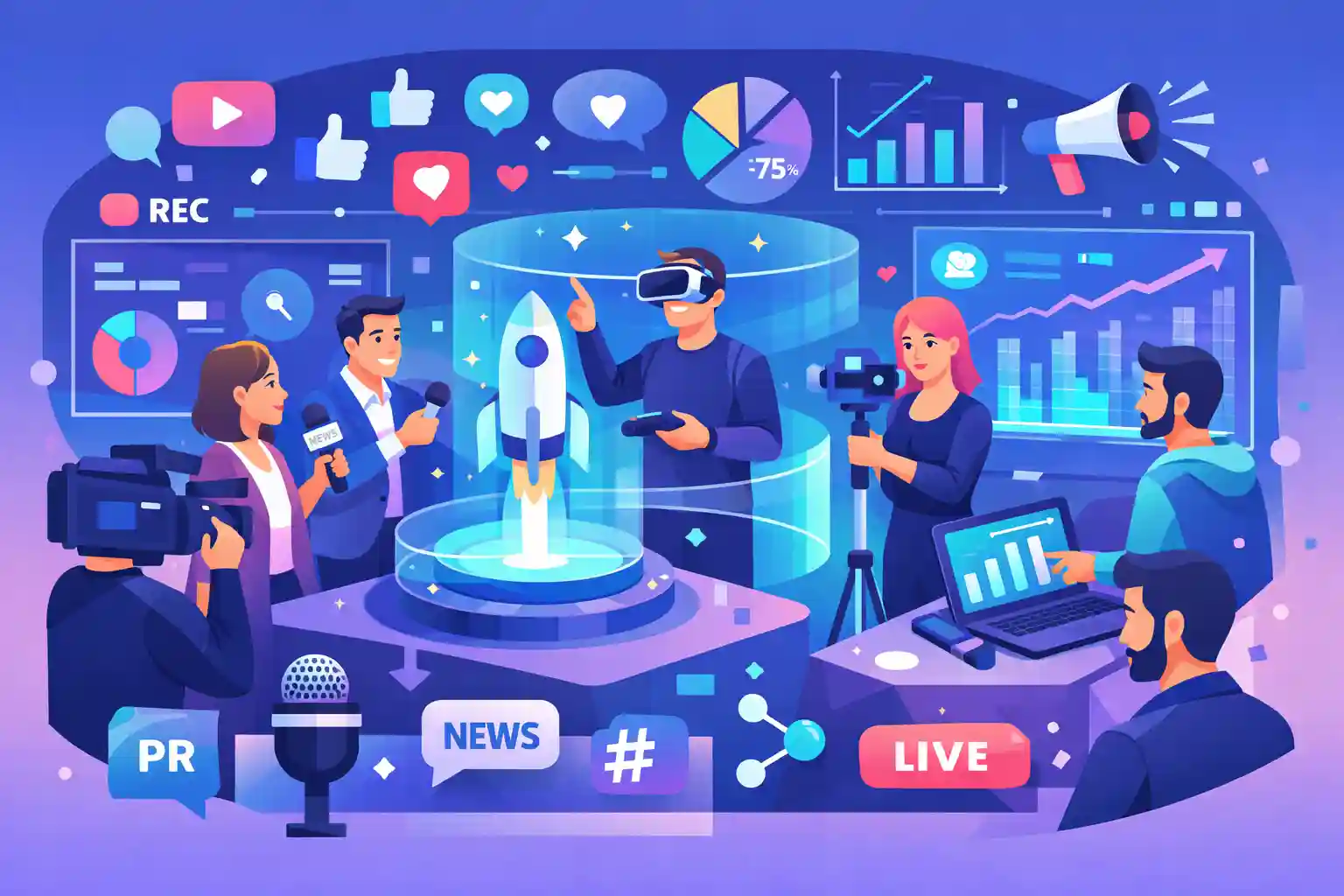
Experiential marketing in 2026 is no longer about hosting an event and hoping for turnout. It has become a strategic growth channel where physical moments are designed to generate digital momentum, earned authority and measurable results. Consumers attend pop-ups, launches and immersive installations not just to participate, but to capture and share. Every activation becomes content and every attendee becomes a distribution point.
The brands that win are not those with the biggest events, but those that build amplification into the experience from the beginning. A live activation without influencer integration fades quickly. A pop-up without paid support struggles to scale. A launch without earned media lacks credibility. Experiential marketing now requires coordination between on-ground execution, influencer deployment, media outreach and performance tracking.
The formula is simple: offline experiences create social momentum, which drives earned authority and measurable ROI. The leading agencies treat experiential campaigns not as one-time events, but as integrated growth engines built to extend reach and sustain impact.
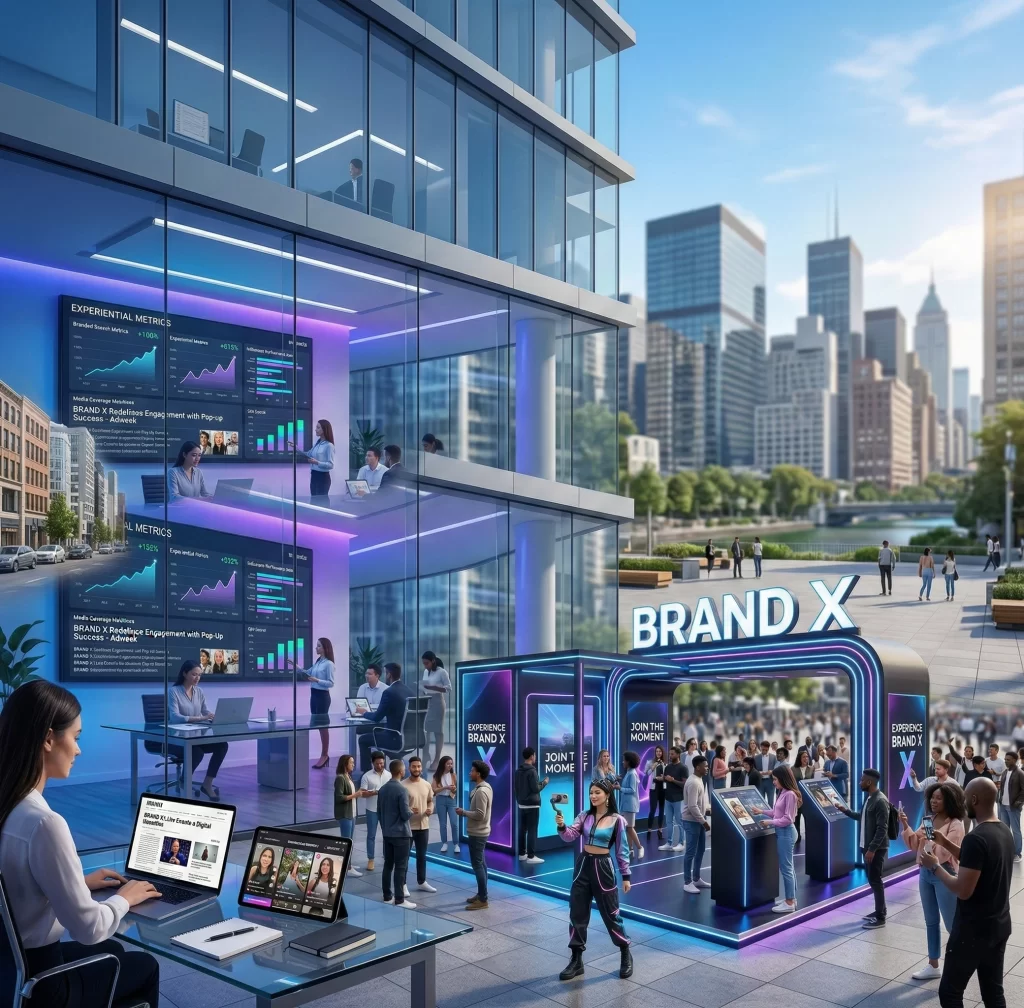
Experiential PR combines immersive brand activations with structured public relations and digital scaling strategies.
Experiential marketing includes:
Digital amplification ensures those experiences extend far beyond physical attendance through:
In earlier marketing cycles, experiential campaigns focused on impressions and foot traffic. In 2026, CMOs demand measurable outcomes, including traffic growth, branded search lift, share of voice and conversion impact.
Experiential PR is not about scale alone. It is about structured amplification.
The marketing environment in 2026 is more fragmented than ever. Attention spans are shorter. Algorithms control reach. Media cycles are faster and less predictable. A brand can trend in the morning and lose relevance by evening.
This creates three major challenges for brands.
First, live experiences are expensive. Without digital amplification, the ROI window closes quickly. A one-day activation cannot justify its cost unless it drives sustained online visibility and measurable impact.
Second, influencer-only campaigns may generate reach but often lack credibility. Without earned media support and structured storytelling, social impressions rarely build long-term brand authority.
Third, earned media without social momentum struggles to scale. Press coverage provides credibility, but without influencer integration and paid amplification, it fails to drive consistent engagement or performance lift.
Integrated experiential PR solves these problems by connecting physical brand moments to:
The result is not just visibility. It is a layered authority supported by credibility, scale and measurable outcomes.
In 2026, experiential campaigns must perform across multiple channels simultaneously. The agencies that can manage this complexity define the category.
Not every public relations firm is equipped to execute experiential campaigns at scale. And not every experiential marketing agency understands digital performance, influencer velocity, or earned media authority.
In 2026, true integration requires more than hosting an event and posting a recap of content. It requires a structured framework that connects live activations to measurable business outcomes.
The agencies listed below were evaluated using the following criteria:
True experiential and digital integration means the agency understands both cultural storytelling and measurable growth. It is not about hosting the biggest event. It is about designing an activation that travels across platforms, earns media authority and drives sustained business impact.
Jive PR + Digital operates at the intersection of experiential storytelling, influencer ecosystems, earned media authority and performance-driven digital amplification. In 2026, when brand activations must extend beyond physical attendance, Jive PR + Digital positions itself as an integrated PR agency capable of turning live experiences into scalable digital campaigns.
The agency works extensively with consumer, lifestyle, retail and food and beverage brands across the U.S. and Canadian markets. Its strength lies in cross-border campaign alignment, creator-led amplification and measurable engagement scaling. Rather than treating experiential marketing as a standalone event, Jive PR + Digital structures campaigns to generate sustained media visibility and digital momentum.
Meow Wolf, a U.S.-based immersive arts and entertainment company known for interactive, large-scale experiential installations, partnered with Jive PR + Digital as its agency of record to support corporate communications and experiential expansion.
The objective was to position Meow Wolf as a premier creative entertainment company while supporting documentary launches, experiential installations and major market expansions, including Las Vegas and Denver.
Jive PR + Digital led full-scale media coordination, managing communications across film launches, experiential activations, partnerships, festivals and corporate storytelling. The strategy integrated earned media, national press outreach and digital amplification to extend visibility beyond physical attendance.
Edelman brings enterprise-scale infrastructure to experiential public relations. As one of the largest global PR firms, Edelman excels at integrating corporate messaging with large-scale public activations, particularly within ESG, sustainability and corporate transformation campaigns.
Its global network enables multinational experiential campaigns that align executive positioning, media outreach and stakeholder engagement across markets.
A global technology company launched a sustainability-focused experiential activation across three major cities to support its ESG repositioning strategy. Edelman integrated executive interviews, cross-regional earned media outreach and digital amplification targeting investors and institutional stakeholders.
The campaign extended beyond on-site visibility, reinforcing the company’s ESG credibility across business media and corporate audiences.
5WPR is recognized for high-impact consumer experiential campaigns supported by aggressive media pitching and influencer access. The agency specializes in fashion, beauty and lifestyle categories where cultural visibility and retail acceleration are critical.
5WPR’s experiential marketing strategies are designed to create buzz quickly and translate event momentum into earned coverage.
A fashion brand activation at a major cultural event leveraged influencer collaborations and coordinated media outreach. The campaign secured national coverage in lifestyle outlets while driving increased retail demand and accelerated product sell-through.
Zeno Group blends experiential storytelling with emotionally intelligent brand positioning. Its campaigns are often narrative-driven, aligning activations with broader brand transformation strategies rather than one-off moments.
Zeno’s approach integrates data-backed insights with experiential marketing to reinforce long-term brand trust.
A wellness brand launched an experiential activation centered around mental health awareness. Zeno supported the activation with influencer interviews, earned media storytelling and digital performance tracking.
The campaign strengthened brand trust metrics while increasing media visibility and audience engagement.
MikeWorldWide is renowned for blending corporate and consumer public relations with experiential storytelling. The agency is particularly effective for brands that need large-scale activations supported by executive visibility and national media authority.
MikeWorldWide integrates live brand experiences with a structured earned media strategy, influencer coordination and reputation management. Their strength lies in ensuring experiential marketing supports both consumer engagement and corporate positioning simultaneously.
A consumer electronics brand launched a high-visibility experiential activation tied to a strategic rebrand. MikeWorldWide coordinated executive interviews, secured feature coverage in business and consumer media and amplified activation content through influencer and digital distribution channels.
The campaign repositioned the brand as innovation-forward while increasing national media visibility and strengthening stakeholder credibility.
Prosek Partners is a leading firm in financial, fintech and B2B communications. While traditionally recognized for investor-facing PR, the agency has expanded into experiential campaigns that support institutional credibility and business authority.
Prosek is particularly strong when experiential marketing needs to reinforce funding narratives, executive positioning, or enterprise-level growth strategies. Their activations are structured around credibility, not just visibility.
A fintech company launched a high-profile experiential event during a major financial industry conference. Prosek integrated executive speaking opportunities, secured tier-one business media coverage and amplified activation highlights across LinkedIn and financial digital platforms.
The campaign strengthened investor confidence, increased institutional visibility and reinforced the company’s market leadership positioning.
NoGood treats experiential campaigns as performance marketing funnels. The agency integrates creative activations with structured paid media scaling and conversion tracking.
Its focus is on turning brand activations into measurable customer acquisition growth.
A DTC fashion brand activation integrated influencer content with retargeting campaigns and paid scaling. The campaign generated a strong return on ad spend and measurable acquisition growth.
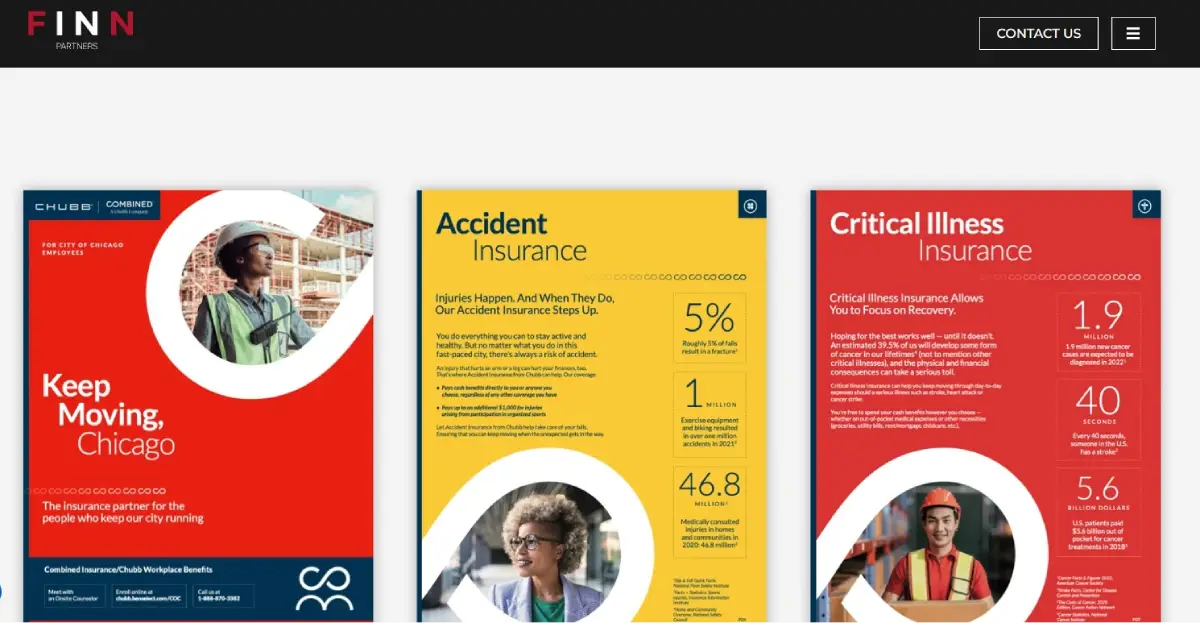
Finn Partners combines corporate authority with consumer experiential storytelling, particularly within purpose-driven and ESG-focused campaigns. The agency integrates experiential marketing with earned media to reinforce long-term brand positioning.
A sustainable travel activation was amplified through lifestyle media outreach and influencer partnerships. The campaign strengthened ESG positioning while increasing audience engagement across digital platforms.
Choosing the right experiential PR partner in 2026 is about strategic alignment, not just reputation. Experiential marketing now requires integration across media, influencers, paid amplification and measurable reporting.
Consider:
Experiential marketing without amplification is incomplete. A live event may generate excitement in the moment, but without digital scaling and earned authority, its impact fades quickly.
Similarly, digital buzz without structured PR support is fragile. Social engagement can spike, but without media credibility and narrative control, it rarely compounds into long-term brand equity.
The agencies listed above demonstrate how live brand moments can evolve into multi-channel growth strategies. By integrating influencer ecosystems, earned media authority, paid digital scaling and measurable reporting frameworks, they convert short-term activations into sustained visibility.
visibility.
In 2026, experiential campaigns are no longer isolated tactics. They are strategic growth platforms.
Brands that succeed will not simply host events. They will design experiences engineered for amplification, credibility and measurable momentum.
Because in modern marketing, presence creates attention.
But integration creates authority.
A specialized innovation PR agency understands technical products, regulatory sensitivity and investor expectations. They translate complex technology into clear, credible narratives that resonate with business, tech and mainstream media.
Experiential PR extends the impact of a live activation through influencer content, press coverage, paid retargeting and cross-platform storytelling. ROI is measured through engagement rates, website traffic, conversions, branded search growth, share of voice and long-term media visibility.
Without digital amplification, experiential campaigns lose momentum once the event ends. Paid media, influencer distribution and earned coverage ensure the activation reaches audiences beyond attendees and continues generating performance impact after the physical event concludes.
Key metrics include engagement rate, social reach quality, branded search lift, website traffic spikes, media placements, sentiment analysis, lead generation and conversion performance. Enterprise brands may also track investor visibility and executive coverage impact.
Brands should evaluate agencies based on integration capability, influencer infrastructure, earned media authority, paid amplification expertise, compliance readiness and reporting transparency. The best partner aligns with brand size, industry regulation, growth goals and geographic reach.


Megan Balyk
Vice President · 15+ Years of Experience
Megan Balyk is the Vice President at Jive PR + Digital, leading campaigns that build cult brands through bold storytelling and cultural relevance.
With 15+ years of industry experience, she specializes in helping ambitious brands connect authentically with Gen Z and Millennial audiences.
Connect on LinkedIn